a tree with many leaves

Wooden

Wooden

prisoners

prisoners

Roof truss for a time that has no time to raise

Time,
material, and financial savings

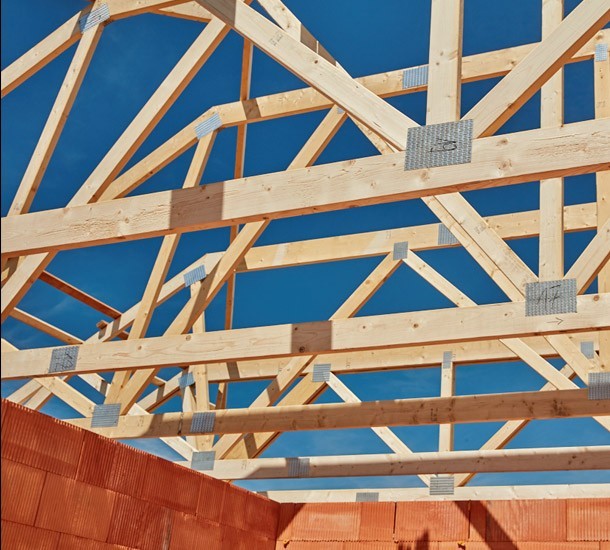
Truss beams represent an alternative to traditionally tied roofs. In addition to their lightweight and quick production and assembly, their advantage is also their shape variability. This technology offers significant reduction of classic static elements (load-bearing walls, columns, etc.) and thus also savings on incurred costs and greater spatial variability. Their application is essentially universal, trussed roofs are a great solution especially for buildings with large roof spans without additional internal support - for example, in industrial halls, warehouses, supermarkets or agricultural buildings. This fact can also be utilized in larger or more complex family houses.

Truss beams represent an alternative to traditionally tied roofs. In addition to their lightweight and quick production and assembly, their advantage is also their shape variability. This technology offers significant reduction of classic static elements (load-bearing walls, columns, etc.) and thus also savings on incurred costs and greater spatial variability. Their application is essentially universal, trussed roofs are a great solution especially for buildings with large roof spans without additional internal support - for example, in industrial halls, warehouses, supermarkets or agricultural buildings. This fact can also be utilized in larger or more complex family houses.

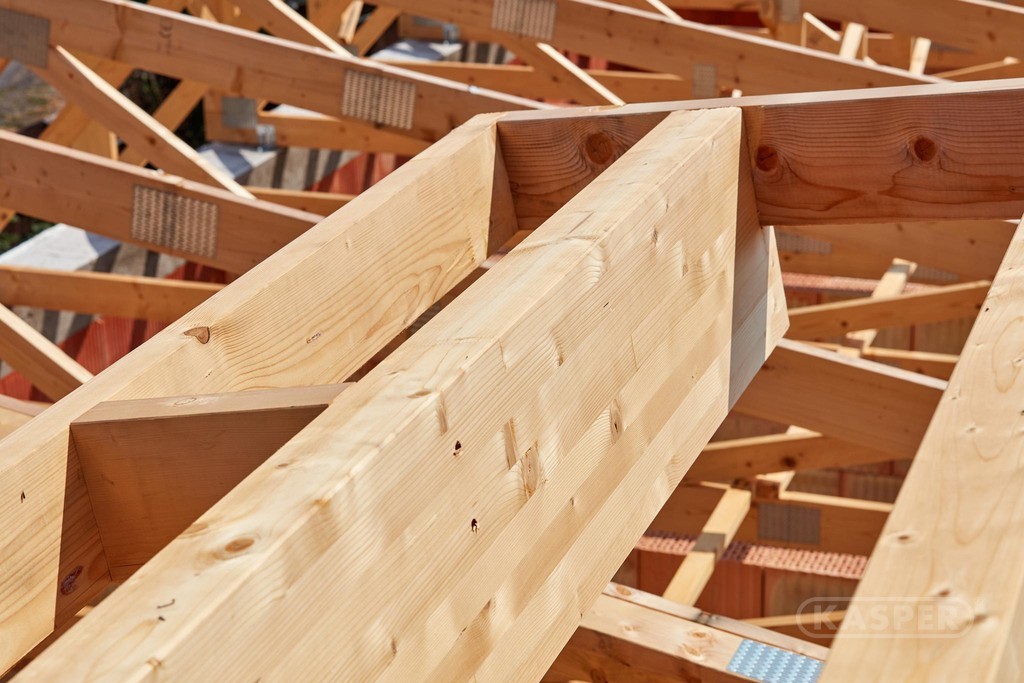
The production of trusses is facilitated by the assistance of computing technology, and assembly owes its speed to joint plate technology. This is a pressed galvanized steel plate with pre-pressed pins, which serves as a connecting element for individual cross-sections. Joint plates have been used under the trade name Gang nail since 1995, and today, due to their simplicity, strength of the connection, and favorable price, they are among the most popular carpentry technologies. For the production of truss structures, we at KASPER SK have the appropriate machinery, software, and personnel support. 

The production of trusses is facilitated by the assistance of computing technology, and assembly owes its speed to joint plate technology. This is a pressed galvanized steel plate with pre-pressed pins, which serves as a connecting element for individual cross-sections. Joint plates have been used under the trade name Gang nail since 1995, and today, due to their simplicity, strength of the connection, and favorable price, they are among the most popular carpentry technologies. For the production of truss structures, we at KASPER SK have the appropriate machinery, software, and personnel support. 

The advantages of truss girders
  • cost savings due to faster and easier production and lower material consumption


  • high shape and construction variability and a high degree of prefabrication


  • the possibility of adjusting the upper belt on CNC centers, including a smooth arc


  • low weight and material consumption, high ecological value of the material


  • quick assembly regardless of the season and wood protection by impregnation
Application options for truss beams
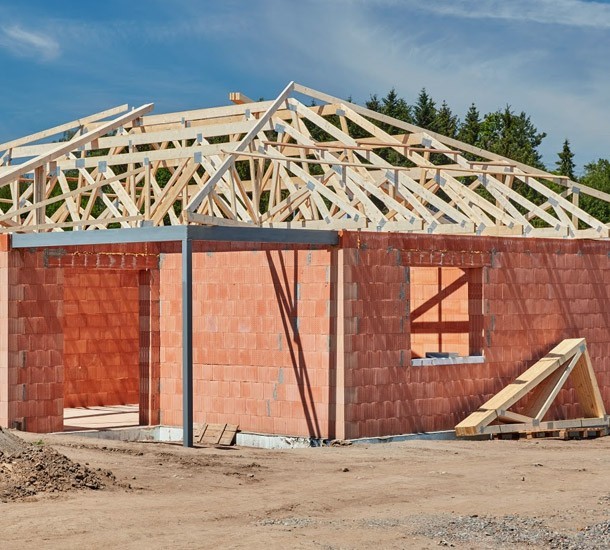
  • wooden truss roof trusses of various shapes - gabled with utilized or unused attic space, shed, hipped, etc.


  • trussed roofs for commercial, industrial, agricultural, and sports facilities with a free span limitation of up to 30 meters


  • load-bearing "frameworks" of simple industrial and storage halls, load-bearing wall system for passive buildings, roof extensions, and similar


  • atypical use of formwork elements for monolithic reinforced concrete structures of atypical shapes (bridges), solutions for skate park obstacles, solutions for artificial climbing walls, solutions for atypical backdrops, quality technical service

The production method of truss constructions at KASPER SK

Wooden load-bearing structures with joint panels are usually made from "timber" boards impregnated against fungi, molds, and wood-destroying insects. We use thicknesses from 50 to 70 mm and heights from 80 mm to 240 mm in increments of 20 mm. We work with wood material C24 and carry out the impregnation in Lignofix Stabil Extra solution.

Joint panels are supplied to us by Bova Březnice - practically on-demand according to the processed production documentation. Thus, we eliminate the need for large storage pre-supply, and the resulting savings can again be reflected in the favorable price of our trusses.


Technologies used in the production of trussed beams at KASPER CZ and KASPER SK

KASPER SK

  • 1 x CNC Hundegger SC3

  • 1 × C press BOVA

  • 1 × single-blade computer-controlled angular and cross-cut saw EASY CUT 828 (FANUC)

  • 1 × dipping impregnation bath

  • construction site crane for outdoor handling

  • side and front forklifts

KASPER CZ

  • 1 × C press BOVA

  • 1 × single-blade computer-controlled angular and cross-cut saw EASY CUT 828 (FANUC)

  • 1 × dipping impregnation bath

  • construction site crane for outdoor handling

  • side and front forklifts

  • 2 × board press MARK VI including balancing roller track

  • 2 × single-blade computer-controlled angular and cross-cut saw EASY CUT 828 (FANUC)

  • 1 × four-blade angular and cross-cut saw VKP 4

  • 1 × dipping impregnation bath

  • 1 × CNC wood processing center Hundegger K2i 1250

  • framing press FRAMER LINE for panel production

  • formatting saw KGS/400 for panel materials

  • construction site cranes for outdoor handling

  • side and front forklifts